
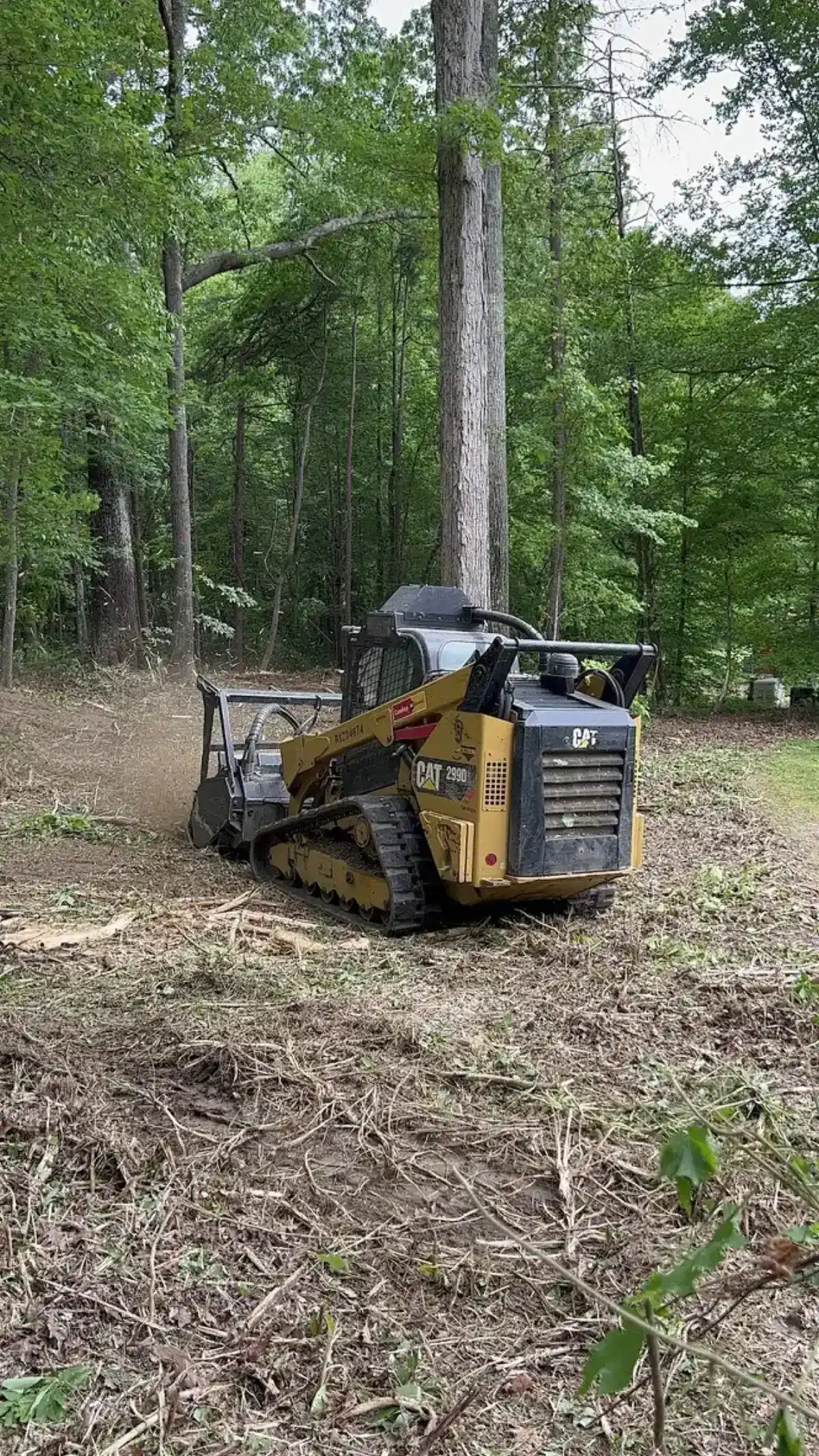
Land grading can correct an uneven yard, prepare a surface for sod or construction, or help water move away from a trouble area. But grading is not a one-size-fits-all answer to every wet spot. Before booking the work, a Winston-Salem homeowner should understand the water source, the proposed route, the limits of disturbance, and what will cover the soil when the equipment leaves.
That is why a useful estimate for land grading and drainage work begins with the property rather than an online price range. The questions below reflect the cost, timing, drainage, and maintenance concerns homeowners are actively asking about—and the Piedmont clay, slopes, and rain patterns that matter around Winston-Salem.
What Should Be Inspected Before a Grading Solution Is Proposed?
The visible low spot is the symptom, not always the source. Roof runoff, a driveway edge, compacted soil, an uphill property, or a broad surface slope can all send water to the same place. An on-site assessment should look at the full route: where water arrives, how it crosses the yard, and where it can safely disperse or leave.
Ask the estimator to explain whether the concern is mainly the surface grade, a concentrated flow that may need a drainage component, or a combination. Regrading changes the shape of the ground. A swale, inlet, pipe, or other drainage feature collects or carries water along a defined path. Choosing between them requires more than seeing a puddle on a dry day.
How Should the Finished Grade Handle Water?
A dependable plan does not simply move water away from one wall or fill one depression. It identifies a continuous route that also accounts for walkways, driveways, planting beds, retaining features, property edges, and neighboring elevations. The proposed outlet or dispersal area matters just as much as the starting point.
Ask what will change in the finished elevations and how the new route avoids creating another trouble spot. If the work is connected to development, redevelopment, or regulated stormwater infrastructure, review the City of Winston-Salem’s post-construction stormwater information and confirm which local requirements apply before work begins.
What Should a Written Grading Estimate Include?
Two grading estimates are only comparable when they describe the same finished result. One may cover machine time and rough shaping; another may include soil, hauling, drainage materials, final grade, erosion protection, and lawn restoration. Ask for a scope that identifies:
- the exact work area and equipment access route;
- which soil or other material will be imported, reused, or removed;
- any drainage components and their proposed outlet;
- protection for utilities, trees, hard surfaces, and adjacent areas;
- the final surface—seed, sod, mulch, gravel, or preparation for later work; and
- cleanup, initial stabilization, and the homeowner’s aftercare responsibilities.
If the grading prepares a future patio, driveway, planting area, or lawn, coordinate that next phase before elevations are set. Webber’s grading and site preparation services cover the broader preparation conversation when the project is about more than correcting one low area.
Why Does the Cost of Regrading Vary So Much?
Yard size matters, but it is rarely the deciding factor. A small backyard with narrow gate access can require more handling than a larger open site. Slope, soil moisture, the amount of cut and fill, imported material, hauling, drainage features, buried utilities, erosion control, and final restoration all affect labor and equipment needs.
Instead of comparing a price per acre, compare the assumptions behind each proposal. Does it address the same water source? Does it leave the same finished surface? Does it include the same drainage and restoration work? The related guide to land grading costs in North Carolina explains why a site-specific estimate is more useful than a broad online average.
What Time of Year Is Best for Land Grading in Winston-Salem?
No single month is best for every property. Piedmont clay can rut and smear when it is saturated, while very dry clay can be difficult to cut and shape. The practical work window depends on recent rainfall, the forecast, slope, machine access, and what needs to happen immediately after grading.
The finish is part of the timing decision. Seed, sod, mulch, gravel, and hardscape preparation each create different sequencing and care needs. If the plan includes sod installation, final grading, sod delivery, installation, and early watering should be coordinated so bare soil is not left exposed longer than necessary.
What Is the Cheapest Responsible Way to Regrade a Yard?
The least expensive sound option is usually the smallest complete scope: correct the contributing grade or flow, provide a workable route and outlet, then stabilize the disturbed ground. Filling only the puddle may be cheaper at first, but it can push water toward another low area. Skipping the finish can leave loose soil vulnerable to washouts and additional repair.
Ask which parts of the proposal are necessary for drainage and stability, and which are appearance or material choices. That distinction can reveal sensible savings without removing the work that makes the solution function.
What Should Happen After the Grading Is Complete?
Before booking, clarify the handoff. Newly graded soil may need protection from foot or equipment traffic, and seed or sod will need its own establishment care. Ask who provides immediate erosion protection, what the homeowner needs to maintain, and what conditions should prompt a follow-up.
After a normal rain, walk the full route rather than checking only the original low spot. Look for new ponding, channels, soil movement, water crossing a walkway, or discharge that does not behave as expected. Photos from before and after the work make that comparison easier.
Book an On-Site Land Grading Estimate in Winston-Salem
Webber Landscaping and Outdoor Solutions provides land grading, drainage correction, and site preparation for Winston-Salem properties. Share what happens during rain, where equipment can reach the work area, and how you plan to use the finished surface. Contact Webber Landscaping to request an estimate, or call (336) 770-2385.