
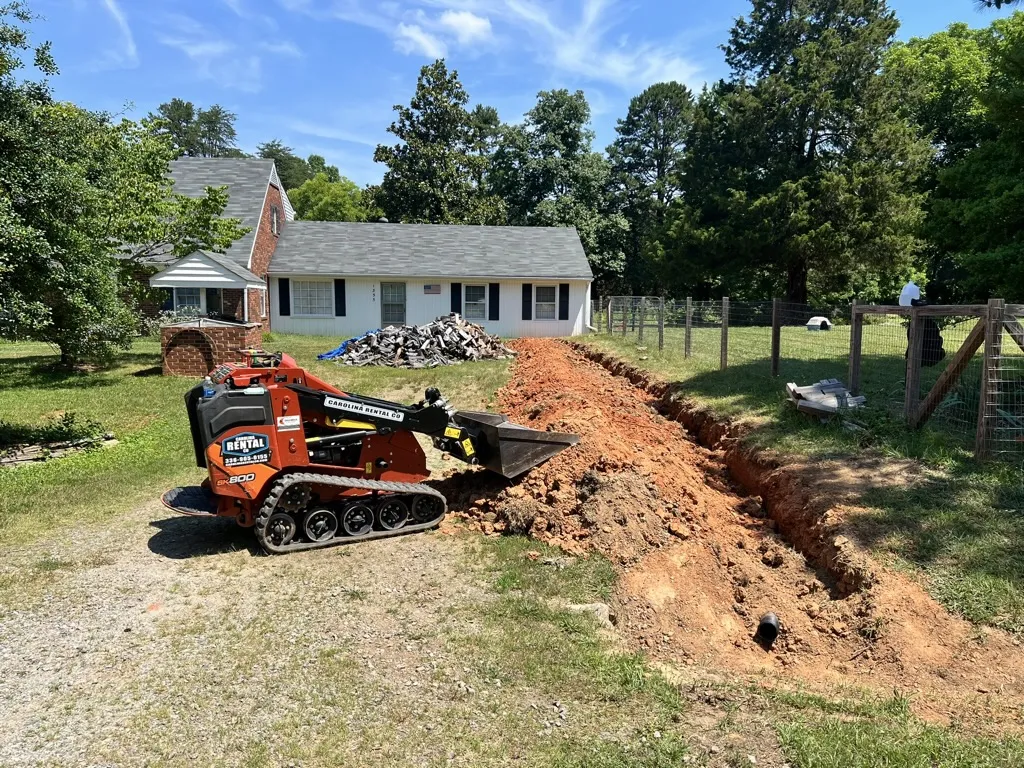
When water lingers in a Winston-Salem yard, the visible puddle is not always the whole problem. The ground may send broad surface runoff toward a low area, a downspout or hard surface may concentrate water faster than the soil can handle it, or both conditions may be happening together. That distinction matters because regrading, a drainage component, and a combined plan solve different parts of the water path.
Before booking land grading and drainage work, ask the estimator to connect the source, route, outlet, and finished surface. The questions below are designed for Winston-Salem property owners comparing scopes—not simply bottom-line prices.
Is the Problem Surface Grade, Concentrated Water, or Both?
Regrading reshapes the surface so water can move across it differently. A drainage feature—such as a swale, inlet, or buried line—collects or carries water along a defined route. If a broad section of lawn falls toward the house, surface elevation may be central to the problem. If roof runoff pours into one small area, changing the grade alone may not address that concentrated source.
Ask what evidence points to the proposed solution. A useful explanation should identify where the water begins, how the planned work changes its path, and where it is expected to disperse or exit. “We will raise the low spot” is incomplete if nobody has accounted for the water that keeps arriving there.
Where Will the Water Go After the Work?
Moving water away from a foundation, lawn, or walkway is only the first half of the answer. The new route also needs to respect hard surfaces, planting beds, property edges, neighboring grades, and any available outlet. Ask the contractor to trace the route in plain language from beginning to end.
A property may not have room for one simple slope. Trees, fences, patios, driveways, utilities, and tight side yards can limit the work area or affect equipment access. If the project is connected to development, redevelopment, or regulated stormwater infrastructure, consult the City of Winston-Salem’s post-construction stormwater guidance and confirm any applicable requirements before work begins.
What Is Included Beyond Moving Soil?
A complete estimate should describe the limits of disturbance and the finish—not just the machine work. Ask whether the scope includes imported fill or topsoil, material removal, drainage parts, final shaping, erosion protection, and restoration with seed, sod, mulch, gravel, or preparation for a future hardscape.
Two estimates that look far apart may cover very different scopes of work. One proposal may stop at rough grading, while another includes drainage installation and lawn restoration. Compare each estimate by the finished result, including site access, soil movement, materials, and final cleanup. These factors have a greater effect on land grading costs in North Carolina than a simple online average.
How Do Piedmont Clay and Weather Affect Timing?
Piedmont clay changes with moisture. When saturated, it can rut or smear under equipment; when very dry, it can be hard to cut and shape. That means the best work window depends on recent rain, the forecast, access conditions, and the surface planned after grading—not one universal month on the calendar.
Ask how weather delays will be handled and what happens if rain arrives after soil is disturbed but before the final cover is established. If the finished yard will receive sod installation, coordinate final grade, delivery timing, and early watering so the surface is not left vulnerable between phases.
Why Acreage Alone Does Not Predict the Price
Homeowners often search for a cost per acre, but residential grading is rarely priced meaningfully by size alone. A small enclosed backyard with a steep access route can require more handling than a larger open area. The amount of cut and fill, soil condition, slope, drainage materials, hauling, erosion control, and restoration all change the scope.
The least-cost responsible option is the smallest complete plan that addresses the actual water path and leaves a stable finish. Filling only the puddle may cost less today, but it can redirect water to another low spot or leave loose soil exposed. Ask which items are necessary for function, which are finish choices, and whether future site preparation or landscape work should be coordinated now to avoid disturbing the same ground twice.
What Should Be Checked After the First Rain?
Clarify the homeowner’s aftercare responsibilities before work starts. Newly placed soil and fresh seed or sod may need watering, limited foot traffic, and observation while the surface settles and vegetation establishes. The scope should state who handles immediate stabilization and where the maintenance handoff begins.
After a normal rain, look beyond the original wet spot. Check whether runoff now approaches a structure, crosses a walkway, cuts a channel, carries loose soil, or collects at the outlet. A complete review follows the new route from source to finish.
Questions to Bring to a Grading Estimate
- What is the likely water source, and what observations support that conclusion?
- Does the proposed scope rely on regrading, a drainage component, or both?
- Where will runoff travel and discharge after the work?
- Which areas, materials, access routes, and restoration steps are included?
- Could permits, private site features, or neighboring grades affect the plan?
- What should be maintained and checked after the first few rains?
Request a Grading and Drainage Estimate in Winston-Salem
Webber Landscaping and Outdoor Solutions provides land grading and drainage correction for Winston-Salem properties and communities across the Piedmont Triad. Tell us what happens during rain, where equipment can reach the work area, and how you want the finished space to function. Contact Webber Landscaping to request an estimate, or call (336) 770-2385.