
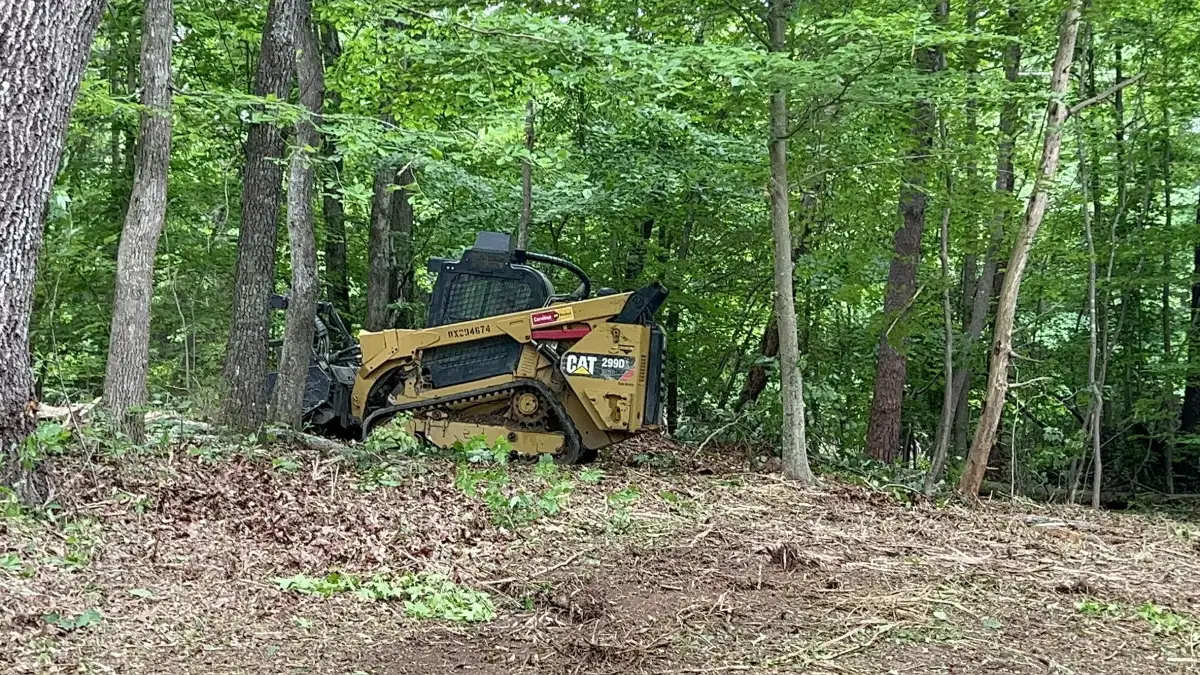
Start With Where the Water Moves and What the Ground Must Support
Land grading changes surface elevations so a property drains and functions more effectively. On a High Point yard or managed site, that can mean smoothing an uneven lawn, correcting a low area, easing a rough transition beside a driveway or patio, or preparing the ground for sod, planting, or hardscaping.
The useful starting point is not simply the wettest spot. Roof runoff, pavement, adjoining slopes, compacted soil, and the direction water takes across the full work area can all contribute to the same problem. Webber Landscaping evaluates those conditions on site before defining where soil may need to be cut, filled, moved, or finished.
For the complete regional service, visit our land grading page. To discuss a High Point property now, request an on-site estimate.
When the Shape of the Ground May Be Part of the Problem
One puddle after a storm does not always mean a yard needs to be regraded. Repeated patterns are more telling—especially when they affect a structure, walkway, lawn, or future improvement.
Water Collects or Runs the Wrong Way
Low areas that stay soft, runoff moving toward a foundation or patio, and water crossing a walkway can point to an unhelpful surface grade or a larger drainage issue.
Clay Soil Washes or Holds Water
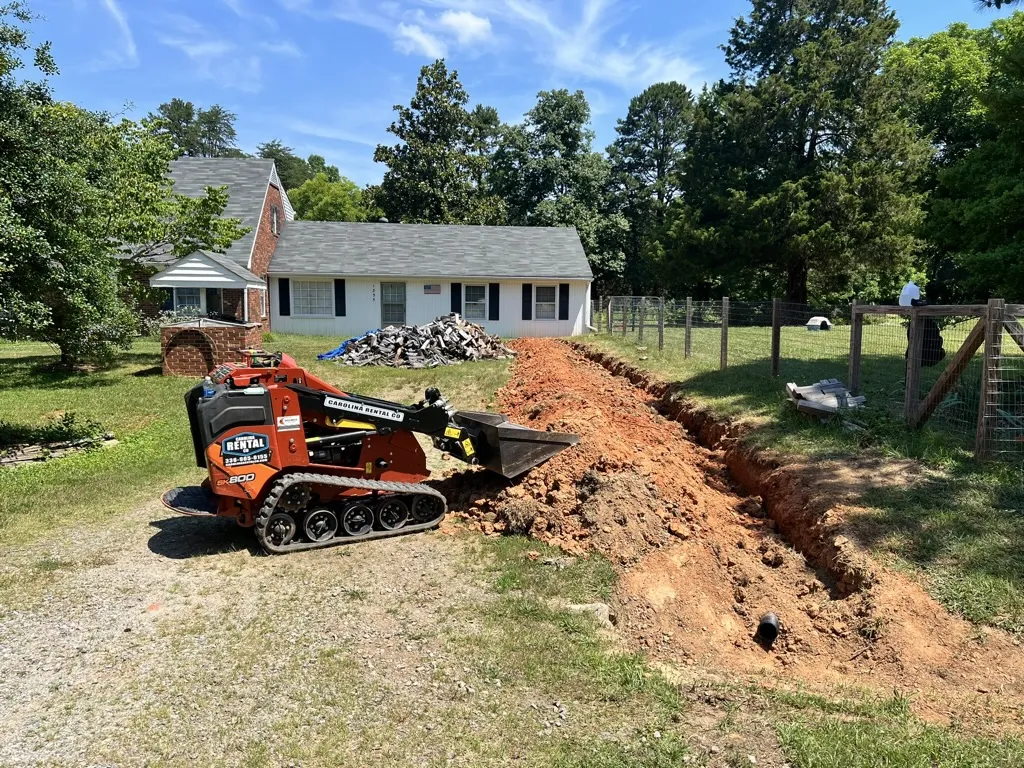
Exposed red clay, small erosion channels, and mulch that repeatedly leaves a bed show where concentrated water is moving. Compacted clay can also remain wet near the surface.
The Site Is Not Ready for Its Finish
Before sod, planting, a patio, or another improvement, the grade should support the intended elevations, drainage path, access, and finished surface.
Rolling Ground and Piedmont Clay Change the Grading Plan
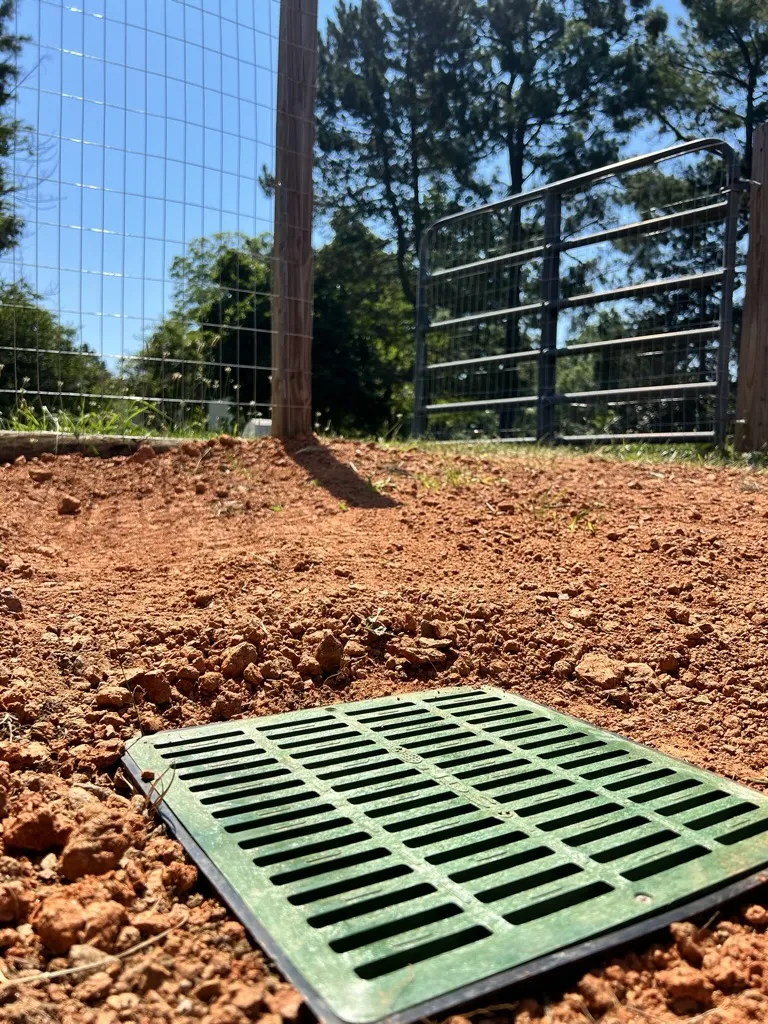
High Point sits within the rolling Piedmont Triad, where grade changes can be noticeable even across a residential lot. Clay-heavy soil adds another variable: it can hold water when compacted, smear when worked too wet, and become difficult to shape when very dry.
That makes timing part of the plan. Work is best scheduled when soil can be shaped and compacted appropriately, with enough favorable weather to stabilize disturbed areas. The final treatment—such as sod, seed, planting, mulch, or stone—should be considered before the grade is completed, not added as an afterthought.
Site constraints matter as well. Gates, fences, mature trees, buried utilities, neighboring elevations, driveways, buildings, and occupied commercial areas can determine which equipment fits and how soil can move through the property.
What an On-Site Grading Estimate Needs to Account For
A broad-acre price or flat yard-leveling number cannot show what a particular High Point property requires. The estimate depends on the correction and the finished use.
Confirm Requirements Before Larger Earthwork
Permit and review needs vary with the property's jurisdiction, disturbance area, drainage impact, easements, and planned construction. Property owners should check applicable requirements before work begins and arrange utility locating. The City of High Point publishes a development guidebook and review resources for projects that may fall within city standards.
Connect Grading With the Rest of the Property Plan
Explore broader High Point coverage, nearby service areas, and related property services without losing sight of the grading work that needs to happen first.
High Point Service Paths
See all landscaping services in High Point, or compare commercial landscaping and lawn mowing service in High Point.
Nearby Communities
Webber Landscaping also serves nearby Thomasville, Greensboro, Kernersville, and Lexington. View the full service area.