
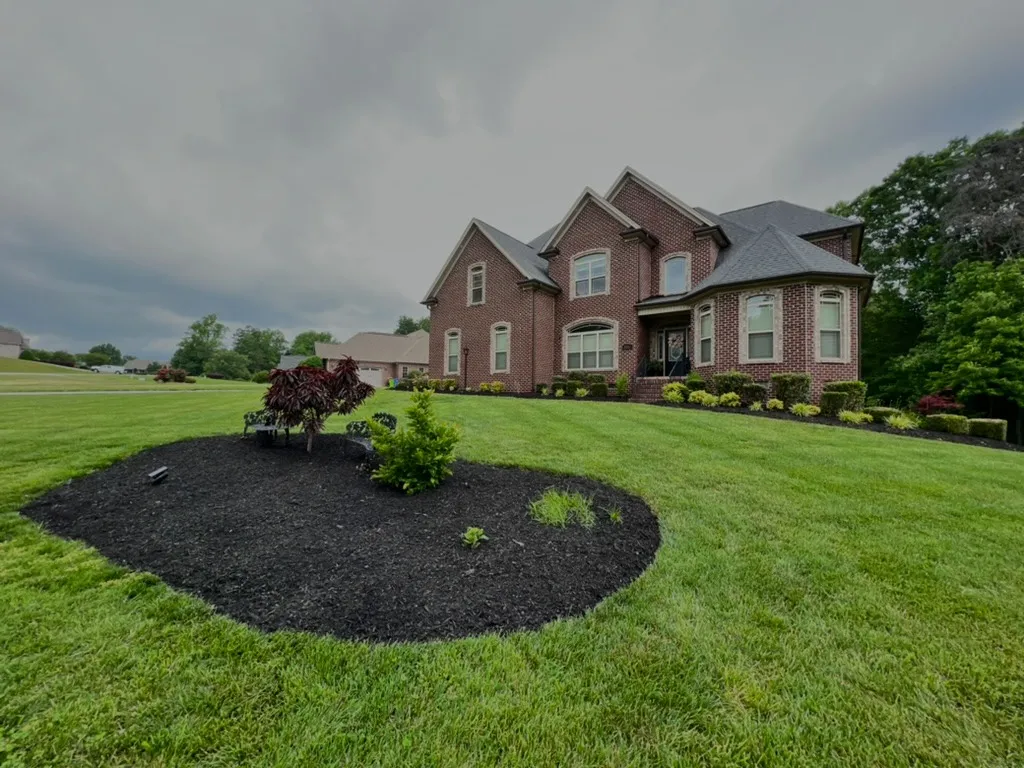
Commercial properties in Winston-Salem and the Piedmont Triad face a specific set of summer challenges that residential lawns do not. Higher foot traffic, larger turf areas, stricter appearance standards from tenants and HOAs, and the liability exposure that comes with public-facing landscapes all demand a maintenance approach built for the June-through-September heat. This guide covers exactly what commercial property managers and owners need to know about keeping grounds looking professional through the hottest months of the year.
The short answer: summer commercial landscape maintenance in the Piedmont Triad requires weekly mowing on a strict schedule, adjusted irrigation timing, proactive weed and pest management, and a crew that shows up consistently. The details of each component are what separate a property that looks maintained from one that looks neglected by mid-July.
Why Summer Is the Most Demanding Season for Commercial Landscapes
The Piedmont Triad sits in USDA Hardiness Zones 7b through 8a, which means summer brings sustained temperatures between 88 and 98 degrees from June through August, combined with relative humidity that regularly exceeds 75 percent. This combination creates rapid grass growth in early summer, followed by heat stress and potential dormancy by late July if maintenance is not adjusted accordingly.
For commercial properties, the consequences of poor summer maintenance go beyond aesthetics. Overgrown common areas, dead turf patches near building entries, and unmaintained parking lot islands create a direct impression on customers, tenants, and visitors. Property management firms across the Triad report that landscape appearance is the second most common tenant complaint during summer months, behind only HVAC issues.
Commercial properties also have legal exposure that residential properties do not. Overgrown vegetation that obscures sightlines at parking lot exits, trip hazards from uneven turf edges along walkways, and fire hazards from dry, unmaintained ornamental grasses all create liability. A consistent summer maintenance program addresses every one of these concerns before they become problems.
Weekly Mowing: Frequency and Height Matter More Than You Think
The single most visible element of commercial landscape maintenance is mowing. During the Piedmont summer, warm-season grasses like Bermuda and Zoysia grow aggressively, requiring weekly mowing to maintain a clean, professional appearance. Skipping even one week in June or July results in grass that is visibly overgrown, with seed heads and uneven patches that take two to three mowings to correct.
Recommended Summer Mowing Heights by Grass Type
| Grass Type | Summer Mowing Height | Mowing Frequency | Notes |
|---|---|---|---|
| Bermuda | 1.5 - 2 inches | Weekly (5-7 days) | Most common on commercial properties |
| Zoysia | 2 - 2.5 inches | Weekly to biweekly | Slower growth, more shade tolerant |
| Tall Fescue | 3.5 - 4 inches | Weekly | Raise height in peak heat to reduce stress |
The critical principle is the one-third rule: never remove more than one-third of the grass blade in a single mowing. Cutting more than that shocks the plant, exposes the crown to direct sun, and triggers rapid moisture loss. On a commercial property with hundreds or thousands of square feet of turf, violating the one-third rule during a heat wave can turn green turf brown in 48 hours.
For properties in Greensboro and High Point with large Bermuda turf areas, Webber Landscaping maintains a strict weekly rotation that keeps every property on a consistent day. This predictability matters for commercial clients because tenants and customers notice when mowing day shifts unpredictably.
Irrigation Management: Timing and Volume Adjustments
Summer irrigation for commercial properties requires a different approach than spring watering. The goal shifts from promoting growth to preventing stress and maintaining color. Here is how irrigation should be adjusted from June through September in the Piedmont Triad.
Water early. All irrigation should complete before 10:00 AM. Watering during the afternoon wastes 30 to 40 percent of applied water to evaporation. Watering in the evening leaves turf wet overnight, promoting fungal diseases that thrive in the Piedmont's humid summer nights -- particularly brown patch and dollar spot, both of which are common on commercial Bermuda turf.
Water deeply but less frequently. Commercial turf needs 1 to 1.5 inches of water per week during summer, including rainfall. It is better to deliver this in two to three deep watering sessions than in daily light sprinklings. Deep watering encourages roots to grow downward, making turf more resilient during the inevitable mid-July heat spikes. Light daily watering creates shallow root systems that wilt at the first sign of drought.
Audit sprinkler coverage. Before summer heat arrives, every commercial property should have its irrigation system audited for coverage gaps, broken heads, and misaligned rotors. A single broken rotor head on a parking lot island creates a dead spot that takes six to eight weeks to recover in mid-summer. A 30-minute walk-through inspection in May prevents thousands of dollars in remediation later.
Weed and Pest Pressure: What to Watch For
Summer weed pressure in the Piedmont Triad intensifies dramatically in June. Crabgrass, nutsedge, and spurge are the three most common summer weeds on commercial properties across Kernersville, Clemmons, and the broader Triad area.
Crabgrass is best controlled preventatively with a pre-emergent herbicide applied in March. By June, any gaps in pre-emergent coverage become visible as crabgrass fills thin spots in the turf. Post-emergent treatment is possible but less effective, and multiple applications are typically needed.
Nutsedge is the bright yellowish-green weed that grows faster than the surrounding grass and stands above the mowing height within days of cutting. It thrives in the wet, compacted soils common on commercial properties with heavy foot traffic. Targeted herbicide treatment is the only effective control -- mowing alone spreads the problem because nutsedge reproduces through underground tubers.
Fire ants become aggressive nest builders in June and July. On commercial properties, fire ant mounds near walkways, building entries, and outdoor seating areas create a genuine safety hazard and a liability issue. Broadcast bait treatments in late May or early June followed by individual mound treatments provide the most reliable control for commercial sites.
Summer Commercial Landscape Maintenance Costs
Commercial landscape maintenance pricing in the Winston-Salem market varies by property size, but here are typical ranges for the summer season.
| Property Type | Monthly Cost (Summer) | Includes |
|---|---|---|
| Small office/retail (under 1 acre) | $400 - $800/mo | Weekly mowing, edging, blowing, bed maintenance |
| Mid-size commercial (1-3 acres) | $800 - $2,000/mo | Above + weed control, irrigation monitoring |
| Large commercial/HOA (3+ acres) | $2,000 - $5,000+/mo | Full-service grounds maintenance program |
These prices reflect weekly service during the growing season (April through October). Most commercial contracts include mowing, edging, blowing of all hard surfaces, bed maintenance, and basic weed control. Irrigation management, seasonal color rotations, and tree or shrub pruning are typically line items that can be added to a base contract.
Heat Stress Recovery: What to Do When Turf Goes Brown
Even well-maintained commercial turf can develop brown patches during extended heat waves. The Piedmont Triad averages 10 to 15 days above 95 degrees each summer, and during these stretches, turf stress is nearly unavoidable on south-facing slopes, near pavement heat islands, and in areas with compacted soil.
The first step is correct diagnosis. Brown turf in summer is not always dead -- Bermuda and Zoysia enter a natural dormancy when conditions become extreme, and they recover when temperatures moderate and moisture returns. The test is simple: pull on a brown grass blade. If it resists and stays rooted, the plant is dormant but alive. If it pulls out easily with no resistance, it is dead and will need sod replacement or overseeding in fall.
For dormant turf, the recovery protocol is straightforward. Increase irrigation frequency slightly (one additional session per week), avoid fertilizing until temperatures drop below 90 degrees consistently, and raise mowing height by half an inch to reduce crown exposure. Most dormant Bermuda recovers within two to three weeks once overnight temperatures drop below 75 degrees, which typically happens in the Piedmont by mid-September.
Planning Ahead: Late Summer Preparation
The best commercial landscape programs use July and August to plan for fall. This is the time to assess which areas need grading corrections before fall planting, identify beds that need mulch replenishment (mulch applied in spring is typically depleted by August in the Piedmont heat), and schedule any hardscape repairs that are easier to complete before fall foot traffic increases.
Fall aeration and overseeding for Fescue properties should be scheduled no later than early August for September execution. Commercial properties that wait until September to schedule often find contractors fully booked, resulting in missed windows that affect turf quality through the following spring.
The Bottom Line
Summer commercial landscape maintenance in the Piedmont Triad is not complicated, but it demands consistency. Weekly mowing on a strict schedule, properly timed irrigation, proactive weed management, and a crew that understands the difference between commercial and residential standards are the four elements that keep a property looking professional from Memorial Day through Labor Day.
Webber Landscaping provides commercial landscape maintenance throughout Winston-Salem, Greensboro, High Point, and the surrounding Piedmont Triad communities. We specialize in weekly commercial mowing contracts with guaranteed service days, irrigation monitoring, and full grounds maintenance programs tailored to each property's specific needs. Request a free estimate or call (336) 770-2385 to discuss your property's summer maintenance plan.