
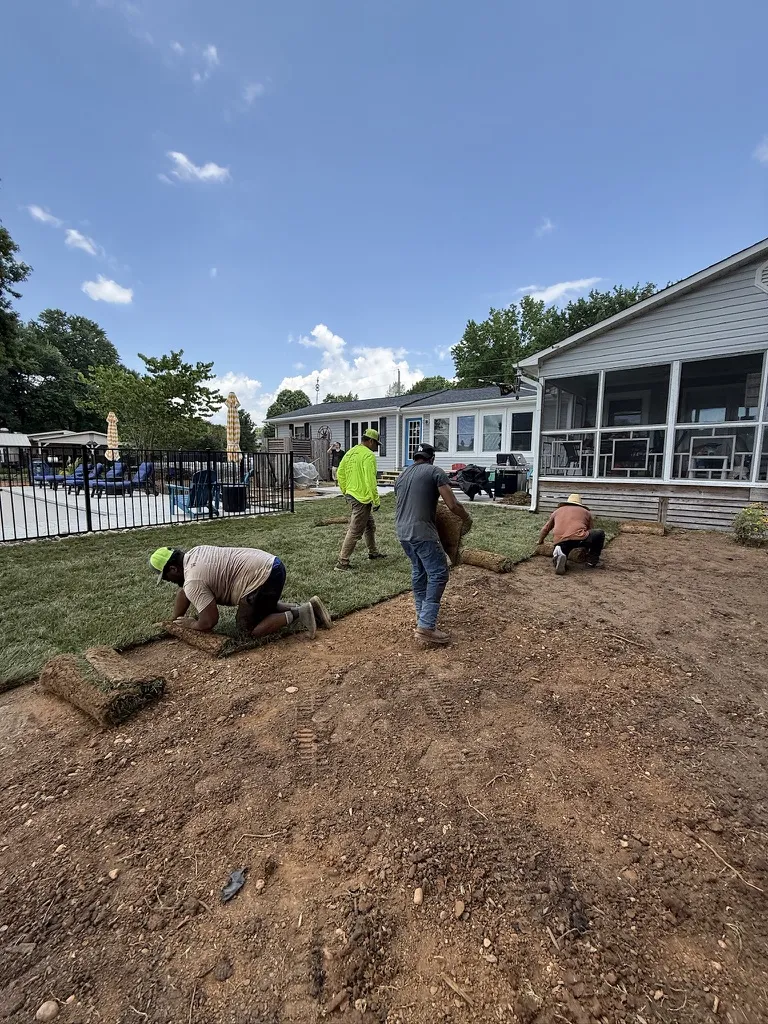
The cost to install sod is not simply the price of grass multiplied by the size of the yard. A complete project may include removing the existing lawn, correcting the grade, preparing Piedmont clay, delivering fresh sod, fitting it around beds and hard surfaces, cleaning up, and starting the watering plan. Those details explain why two Winston-Salem yards with the same square footage can receive very different estimates.
For an accurate number, start with the finished result and the actual site. Webber Landscaping’s sod installation service serves homes and commercial properties in Winston-Salem and surrounding Piedmont Triad communities. This guide shows what should be measured, inspected, and written into a proposal before you compare totals.
What Goes Into a Sod Installation Price?
A sod proposal should account for the full path from the existing surface to the first weeks of establishment. The major cost categories are:
- Sod material and availability. The grass variety, the amount ordered, delivery requirements, and current regional availability affect material cost.
- Removal and disposal. Existing turf, weeds, roots, rocks, or construction debris may need to be stripped and hauled away.
- Soil preparation and finish grading. Compacted or uneven ground may need loosening, added soil, amendments, or reshaping before sod can make consistent soil contact.
- Access and handling. An open front lawn is different from a fenced backyard where rolls must be moved through a narrow gate or around steps, patios, pools, and planting beds.
- Installation labor. Curves, obstacles, slopes, seams, and small fitted pieces take more time than long runs across a clear rectangle.
- Watering and establishment. The handoff should explain when watering begins, who manages it, and what equipment or adjustments are needed to cover the new lawn evenly.
If a low area stays wet or runoff crosses the work zone, solve that issue before sod covers it. Otherwise, the new lawn can inherit the same drainage problem. Webber’s land grading service is the relevant next step when correcting the surface is part of the sod scope.
Why a Per-Square-Foot Number Can Be Misleading
Price per square foot can help compare proposals only when each contractor is quoting the same work. One number might cover sod and placement on a prepared surface. Another might include removal, soil work, grading, delivery, installation, rolling, cleanup, and initial watering. The lower unit price is not necessarily the lower total cost if major preparation is excluded.
Small installations also have fixed costs. Delivery, mobilization, equipment, and setup still occur whether the work area is 500 square feet or several thousand. That is why a small repair area can carry a higher per-square-foot cost than a larger, open lawn even though its total is lower.
How to Estimate the Amount of Sod You Need
Measure the actual turf area rather than the lot size. Divide irregular lawns into rectangles or other simple shapes, calculate each area, and subtract the home, driveway, patios, planting beds, and other spaces that will not receive grass. Mississippi State University Extension likewise recommends measuring the site and subtracting buildings and non-turf landscaping before ordering sod.
A contractor will then account for the layout, cuts, curves, and unusable pieces when determining the order quantity. For a 500-square-foot patch, a sketch with dimensions, photos of the current surface, the nearest access point, and the location of a water source will make the first estimate conversation more useful.
Site Conditions That Commonly Raise the Cost
Preparation is where many price differences begin. Around the Piedmont Triad, dense clay, rolling ground, recent rain, and drainage patterns can all change how a site must be handled. Cost may increase when the project requires:
- removing a thick existing lawn or extensive weeds;
- repairing ruts, settled areas, or an uneven finish grade;
- bringing in soil or hauling material away;
- moving sod by hand through limited access;
- working around trees, beds, fences, walkways, utilities, or irrigation;
- securing sod or controlling water on a slope; or
- coordinating drainage correction before installation.
A site visit should separate necessary preparation from optional improvements. That gives you a clearer way to control the budget without removing work that the sod needs to establish.
Grass Choice Affects Both Price and Long-Term Care
Tall fescue, bermuda, and zoysia do not have identical material costs, availability, sun needs, or maintenance patterns. The right choice depends on how much sun reaches the yard, how the lawn will be used, and whether year-round color, summer performance, shade tolerance, or wear recovery matters most.
Choosing on pallet price alone can create a more expensive problem later if the grass does not match the site. Ask the contractor to explain why the proposed variety fits the light and use conditions. For timing considerations after that choice is made, see the guide to the best time to install sod in North Carolina.
How to Compare Sod Installation Quotes
Put the estimates side by side and mark what each one includes. A useful written scope should answer these questions:
- What exact area is being measured, and what sod variety is specified?
- Will the existing grass and debris be removed and hauled away?
- What soil preparation, added material, or grading is included?
- How will slopes, drainage concerns, obstacles, and site access be handled?
- Are delivery, installation, rolling or firming, cleanup, and initial watering included?
- Who is responsible for irrigation checks and establishment care after the crew leaves?
- What conditions are excluded, and how would a change in scope be approved?
Also ask how the contractor handles sod that arrives dry or damaged, visible gaps, edges that dry faster than the center, or areas that do not make good soil contact. Do not assume a warranty or establishment visit is included; have any such commitment written into the proposal.
Budget for the First Weeks, Not Only Installation Day
New sod needs immediate and consistent moisture while roots begin attaching to the prepared soil. The watering plan should cover corners, edges, slopes, and areas near reflective hard surfaces without leaving the lawn continually saturated. Those early weeks can add water use and may require sprinkler adjustments or additional hose coverage.
Common early problems include dry seams, lifted edges, footprints or equipment traffic, standing water, and mowing before the turf is anchored. Clarify the watering and first-mow handoff before installation so the finished lawn has a realistic establishment plan.
Request a Site-Specific Sod Estimate
Webber Landscaping and Outdoor Solutions installs sod across Winston-Salem, Greensboro, High Point, Kernersville, Clemmons, and nearby service areas. Share the approximate lawn size, current surface, access, sun exposure, water availability, and any drainage concerns. Contact Webber Landscaping to request an estimate, or call (336) 770-2385.