
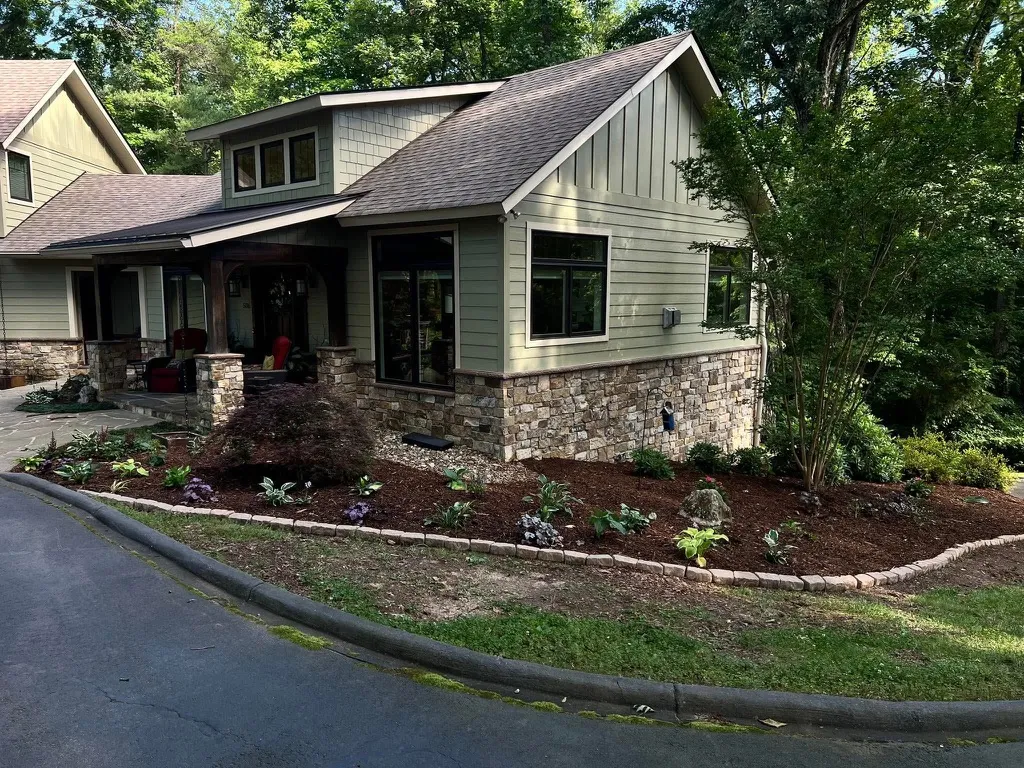
Webber Landscaping’s current service information gives $150 to $400 per month as a typical residential landscape maintenance range in the Winston-Salem and Greensboro area. That range is a useful starting point, not a flat rate. A small property with a few simple beds is different from a landscape with dense plantings, fast-growing shrubs, leaf-heavy trees, slopes, or several high-visibility areas.
The clearest way to understand cost is to separate the work that repeats from the work that resets or improves the property. Webber Landscaping provides landscape maintenance for homes and commercial properties in Winston-Salem and other Piedmont Triad communities. This guide explains what affects the estimate, which services belong in the maintenance scope, and how to compare proposals without assuming every “yard service” includes the same work.
What Does Landscape Maintenance Include?
Landscape maintenance covers the planted and detailed parts of the property that mowing alone does not keep in shape. Depending on the written scope, a visit may include:
- cleanup and weed removal in planting beds;
- shrub pruning or shaping at an appropriate time;
- bed-edge touchups and debris removal from hardscape edges;
- seasonal cutbacks, leaf removal, and storm-debris attention;
- mulch or pine-straw refresh recommendations; and
- notes on declining plants, exposed soil, washouts, or other visible trouble spots.
Mowing may be a separate service. New planting, grading, drainage correction, sod, and hardscaping are improvement projects rather than routine bed care. If you want mowing and planting-bed work under one plan, compare the scope with Webber’s landscape and lawn maintenance service.
Seven Factors That Change the Price
1. Maintained area, not just lot size
A lot measurement does not show the actual workload. The home, driveway, natural areas, lawn, patios, and woods may take up most of the parcel. The estimate should focus on the beds, shrubs, edges, entrances, common areas, and other zones that will receive recurring attention.
2. Plant density and landscape complexity
A simple foundation bed with a few established shrubs is faster to maintain than layered beds with ornamental grasses, groundcover, flowering shrubs, small trees, and narrow spaces between plants. More plant material creates more pruning decisions, handwork, and debris.
3. Visit frequency
A monthly plan, seasonal visits, and a one-time cleanup are not interchangeable. Recurring visits can keep weeds, growth, and debris within a predictable workload. A property that waits until beds are overgrown may need a larger reset before ordinary maintenance can begin.
4. Starting condition
Overgrown shrubs, heavy weeds, buried bed edges, thick leaf accumulation, and washed-out mulch can add significant time to the first visit. Ask the proposal to separate the initial cleanup from the ongoing price so you can see which cost repeats and which does not.
5. Access and debris handling
Steep ground, tight gates, long distances from the truck, limited parking, fragile hardscapes, or beds behind retaining walls can slow the work. The amount of material that must be collected and hauled away also affects the scope.
6. The expected property standard
“Keep it controlled” and “keep every entrance presentation-ready” describe different service levels. A home may prioritize the front walk and outdoor living area. An office, church, retail site, or HOA may need consistent detail around signs, parking islands, sidewalks, and shared entrances. The estimate should say which zones receive the most attention.
7. Seasonal add-ons and improvement work
Mulch installation, seasonal color, major pruning, planting changes, storm cleanup, and large leaf-removal visits may be scheduled separately from the base maintenance plan. Keep those items visible instead of accepting one vague total that makes it difficult to understand what will happen during a normal visit.
Recurring Maintenance, Seasonal Detail, or a One-Time Reset?
The right pricing structure depends on the property’s current condition and the result you want. These three scopes solve different problems:
| Scope | Best fit | What to clarify |
|---|---|---|
| Recurring maintenance | Beds and shrubs that are already under reasonable control | Visit rhythm, priority areas, routine tasks, and exclusions |
| Seasonal detail | Properties needing spring, summer, fall, or winter attention | Pruning windows, leaf or debris volume, mulch, and cutbacks |
| One-time reset | Overgrown or neglected landscapes that need a clean starting point | Removal, haul-away, bed-edge recovery, pruning limits, and follow-up care |
A one-time reset can cost more than an ordinary visit because it corrects accumulated growth and debris. It should not be used as the expected monthly number. Likewise, a renovation with new plants, drainage work, sod, or hardscape belongs in a separate improvement proposal.
How to Compare Two Landscape Maintenance Estimates
Put both proposals next to the same questions. A lower total is not a better value if it leaves out the work you assumed was included.
- Are the same areas included? Check front beds, side yards, signs, parking islands, patios, mailbox beds, and common areas.
- What happens during a normal visit? Look for specific tasks instead of a broad promise to “maintain the landscape.”
- How often will each task occur? Mowing, bed cleanup, pruning, mulch, and leaf removal do not necessarily follow the same schedule.
- Is the first cleanup priced separately? A reset should not silently become the expected recurring charge.
- What is an add-on? Confirm mulch, seasonal color, plant replacement, storm cleanup, hauling, and project work.
- How are extra needs approved? For shared or commercial properties, identify who can authorize work beyond the routine scope.
Commercial sites often need an even clearer written standard because several people may judge the same landscape. Webber’s commercial grounds maintenance page explains the recurring property-care context for businesses, HOAs, churches, retail sites, and other shared spaces.
Why Winston-Salem Properties Need a Seasonal Scope
Landscape workload changes through the Piedmont Triad’s growing seasons. Warm-weather growth can quickly soften bed edges and change shrub shape. Summer heat can expose stress in newer plantings. Fall leaves collect beneath shrubs and across groundcover, while winter is often a useful time to see plant structure and plan corrective work.
Soil and drainage also affect what the crew sees. Washed mulch, exposed clay, wet pockets, or soil moving across an edge may point to a site issue rather than a need for more frequent weeding. A maintenance estimate should identify what can be handled during routine visits and what needs a separate grading, drainage, or planting solution.
How to Keep the Budget Focused
Start with the areas that shape the first impression and the problems that worsen when ignored. For many properties, that means entrances, front beds, walkways, signs, patios, and the shrubs or ornamental grasses that grow into paths. Lower-visibility areas may need a different rhythm.
Then decide whether the priority is a clean, practical baseline or a higher-detail appearance. That choice lets the contractor build a scope around the budget instead of pricing every possible task. When you request an estimate, share the address, property type, photos of the current condition, access limitations, the areas you care about most, and whether you want recurring visits, seasonal help, or a one-time reset.
For a price based on the actual maintained areas and service level, request a landscape maintenance estimate or call (336) 770-2385.