
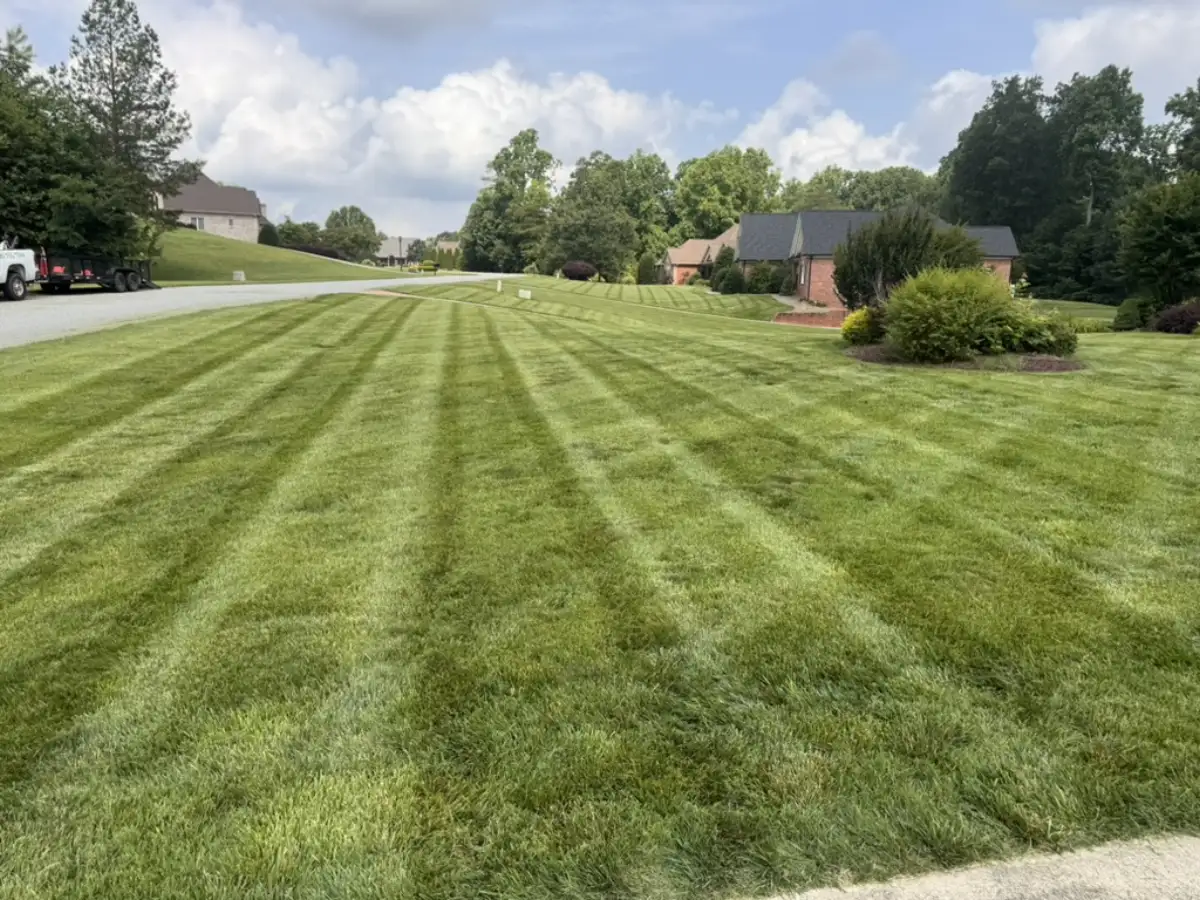
For residential properties in Winston-Salem, Webber Landscaping’s current service information gives $35 to $75 per visit as a typical range for weekly mowing. That is a useful planning number, but it is not a price list for every yard. The mowable area, slope, access, obstacles, edging, current grass height, and visit frequency all change the workload.
A fair comparison starts with the same scope. One quote may mean cutting the open turf only. Another may include the complete visit Webber describes for its lawn mowing service: mowing, trimming, edging, and blowing hard surfaces clean. This guide explains what moves the price and what to ask before choosing recurring service in Winston-Salem.
The Six Property Details That Change a Mowing Price
1. Mowable lawn area
Contractors need the turf area, not simply the lot size shown in a property record. A quarter-acre parcel can have a large house, driveway, patio, beds, or wooded sections that reduce the grass area. Another parcel of the same size may be mostly open lawn. Photos help with an initial conversation, but an on-site look gives a clearer measure of what must actually be cut.
2. Slope, softness, and site conditions
An open, level lawn is faster to handle than steep ground, narrow terraces, drainage swales, or areas that remain soft after rain. These conditions may limit equipment choices or require more careful turns and passes. Recent weather matters too: mowing saturated ground can leave ruts or disturb the turf, so the service plan should explain how weather delays are handled.
3. Gates and equipment access
A fenced backyard with a narrow gate may require different equipment from an open front lawn. Steps, retaining walls, parked vehicles, play equipment, utility features, and tight side yards also affect access. When requesting a quote, note gate widths and any area that cannot be reached by the main mower.
4. Trimming and edging workload
Trees, fence lines, mailbox posts, beds, walkways, curbs, and other obstacles add detail work even when the turf area is modest. Confirm which edges will be cut and which obstacles will be trimmed. This is often where two similarly sized yards require different visit times.
5. Current grass height and first-visit cleanup
A maintained lawn is different from an overgrown first cut. Tall or heavy growth may require slower travel, multiple passes, added trimming, and more cleanup. If the first visit costs more than the recurring visits, the written estimate should make that distinction clear instead of leaving you to assume every visit has the same price.
6. Frequency and route fit
Recurring mowing creates a predictable route and a more consistent workload. During the Piedmont Triad’s active growing season, weekly visits also make it easier to follow the one-third rule—avoiding removal of more than one-third of the grass blade at once. Less frequent mowing may reduce the number of visits but can make each cut heavier. Ask for both the per-visit price and expected schedule so you can compare the likely seasonal total.
What Should Be Included in a Lawn Mowing Estimate?
A useful proposal should define the finished visit in plain language. Webber Landscaping’s weekly service includes mowing, trimming, edging, and blowing hard surfaces clean. The estimate should also identify:
- the front, back, side, common, or roadside turf areas included;
- the expected visit frequency and how seasonal growth affects the schedule;
- which walkways, driveways, curbs, and bed edges receive edging;
- how gates, pets, vehicles, locked areas, and other access issues are handled;
- what happens after rain or when the ground is too wet to mow safely;
- whether an overgrown first cut is priced separately; and
- which services—such as bed care, mulch, leaf cleanup, pruning, or turf treatment—are outside the mowing price.
That last point prevents the common mismatch between “lawn mowing” and broader “lawn care.” Mowing controls turf height and finishes edges. It does not automatically include every task needed in planting beds or every treatment a lawn might receive. If you want one plan to cover more of the grounds, compare the mowing scope with landscape maintenance before accepting an estimate.
Is Weekly or Every-Other-Week Mowing the Better Value?
The lowest number of visits is not always the best value for the lawn. During periods of active growth, waiting two weeks can mean removing too much blade at once or leaving heavy clippings. Weekly service spreads the work across predictable visits and keeps the appearance more consistent. When growth slows, the appropriate rhythm may change.
Ask how the schedule responds to real growth and weather rather than assuming one calendar interval works all year. Webber Landscaping also offers a dedicated weekly lawn mowing service for property owners who want the recurring scope spelled out.
How to Compare Two Mowing Quotes
Put each proposal next to the same six questions:
- Are both contractors pricing the same turf area? Check backyards, roadside strips, shared areas, and fenced sections.
- Do both include trimming, edging, and blowing? A lower total may cover fewer finishing steps.
- Is the first visit priced differently? Make sure an overgrown reset is not hidden inside the recurring figure.
- What schedule is assumed? Compare weekly with weekly and occasional service with occasional service.
- How are rain delays and access problems handled? The plan should say what happens when a normal visit cannot be completed.
- What is outside the quote? Bed maintenance, seasonal cleanup, mulch, pruning, aeration, seeding, and treatment programs should not be assumed.
This comparison is more useful than asking how much three hours of mowing should cost. Crew size, mower width, travel, terrain, trimming, and equipment can make one company’s hour very different from another’s. A property-based price tied to a written result gives you a clearer standard.
What to Send for a More Useful First Estimate
When you contact a mowing company, include the property address, whether it is a home, business, HOA, rental, church, or shared site, and whether you want recurring or one-time service. Add current photos, note any locked gates or steep areas, describe when the lawn was last cut, and list the hard surfaces you expect to be blown clean.
Webber Landscaping serves residential and commercial properties across Winston-Salem and the Piedmont Triad. To get a number based on your actual yard and service expectations, request a lawn mowing estimate or call (336) 770-2385.