
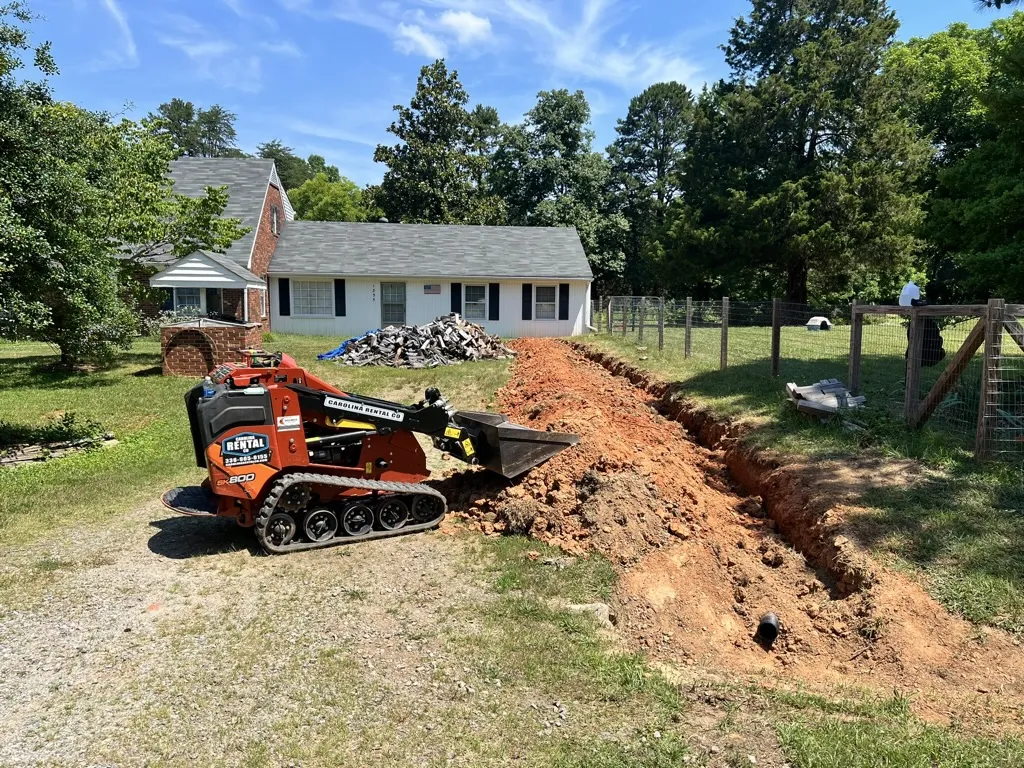
Homeowners usually begin looking for land grading after seeing a symptom: water standing in the lawn, soil washing downhill, runoff crossing a walkway, or a surface that is too uneven for its planned use. The important question before booking is not only whether soil will be moved. It is whether the proposed work accounts for the water source, the route across the yard, the outlet, and the surface that must remain when the job is done.
That full-site view is especially useful for homeowners comparing grading and drainage services in Winston-Salem. Piedmont clay can look very different when saturated than it does after several dry days, and rolling ground can move runoff beyond the place where it first becomes visible. Use the six questions below to decide whether an estimate clearly addresses the problem you called about.
1. Is the Trouble Spot the Cause or the Collection Point?
A puddle shows where water stopped, not necessarily where the drainage problem began. Roof discharge, a compacted strip of soil, runoff from higher ground, or a low transition beside a patio may all feed the same wet area. Ask the estimator to explain what can be observed about the source and the route before recommending a correction.
Good preparation does not require you to diagnose the yard yourself. Record when the problem appears, how long it lasts, and whether water crosses a bed, driveway, walkway, or turf area first. Those observations make it easier to discuss the whole water path instead of treating only the lowest visible point.
2. What Should the Finished Area Be Able to Do?
Grading for surface drainage, smoothing a lawn, preparing for new sod, and setting the surrounding elevations for a patio are different outcomes. Before requesting prices, decide how the space needs to function. Will it carry foot traffic, support healthy turf, meet a hardscape edge, or simply move runoff through a less disruptive route?
The answer affects finish elevations and restoration. It also helps prevent an incomplete comparison in which one proposal ends with exposed soil while another includes topsoil, stabilization, and a finished lawn surface.
3. Does the Plan Call for Grading, a Drainage Component, or Both?
Grading changes the shape of the ground so surface water follows a different route. A drainage component collects or conveys water at a particular point. Neither is automatically the right answer for every wet yard. A low area may respond to reshaping, while concentrated water from a downspout or another source may require a coordinated inlet, pipe, swale, or outlet.
Ask where runoff is expected to go after the work and what each part of the proposed scope is intended to accomplish. If the project is connected to development, redevelopment, or regulated stormwater infrastructure, confirm whether plans or permits apply. The City of Winston-Salem outlines its post-construction stormwater process for covered work.
4. Can You Compare the Written Scope Line by Line?
A grading estimate should define more than a total price. Look for the work limits, equipment access, material to be brought in or hauled away, grading and drainage tasks, protection of the access route, and the final surface. Ask whether seed, sod, topsoil, mulch, gravel, or hardscape restoration is included.
Point out gates, irrigation, lighting wire, invisible fencing, septic components, and other private site features before work begins. Public utility markings may not identify privately installed lines. Narrow access, steep approaches, saturated ground, and established landscaping can all affect the equipment and handling required.
5. Is the Schedule Based on Soil Conditions and the Next Surface?
There is no single best month for every regrading project. Workable soil and a suitable forecast matter. Saturated clay may rut or smear under equipment, while very dry clay can be difficult to shape. The contractor may need to allow the work area to dry after heavy rain before it can hold the intended grade.
The next surface matters as much as the earthwork. Sod, seed, or planting brings establishment and watering considerations; a patio or wall requires surrounding elevations to be coordinated before construction. For projects with a broader construction sequence, review grading and site preparation before the schedule is set.
6. What Should You Watch After the Work Is Complete?
Confirm who is responsible for stabilization, watering, limiting traffic, and checking the area after rainfall. Disturbed soil is vulnerable until the planned cover is established. During a normal rain, observe the new route from beginning to outlet—not only the original puddle—and look for erosion, sediment movement, or water redirected toward another feature.
If a concern appears, photos taken during the event are more useful than waiting for the surface to dry. The goal is a clear handoff: you should know what finish was installed, what early care it needs, and what result the completed scope was designed to produce.
What Determines the Price of Yard Regrading?
Square footage alone does not describe the work. Price can be affected by the depth and complexity of the elevation change, access, material movement, soil moisture, drainage components, disposal, erosion control, and restoration. Compare estimates only after confirming that they describe the same limits and finished condition. For a deeper breakdown, read the guide to land grading cost factors in North Carolina.
Request a Land Grading Estimate in Winston-Salem
Webber Landscaping and Outdoor Solutions provides land grading in Winston-Salem and across the Piedmont Triad. Tell the team what happens during rain, where equipment could enter, and how the area should function afterward. Contact Webber Landscaping for an estimate, or call (336) 770-2385.