
Land grading is not simply a matter of making a yard look level. The work changes how water moves, how a future lawn or hardscape sits, and whether a low or uneven area can be used as intended. Before booking, a homeowner needs to know what problem the proposed grade is meant to solve and what the property should look like when the work is complete.
That distinction matters for homeowners comparing grading and drainage services in Winston-Salem, where rolling sites and Piedmont clay can make water patterns difficult to judge on a dry day. These questions will help you prepare for a land grading estimate, compare scopes, and decide whether the recommendation accounts for both the water path and the finished surface.
What Should I Document Before the Estimate?
Walk the property during or shortly after rain if it is safe to do so. Look for water crossing a walkway, flowing from a downspout, cutting a small channel through a bed, carrying soil downhill, or lingering in turf after nearby ground has dried. Photos or short videos can show a drainage pattern that may not be visible when the estimate is scheduled.
Also identify the outcome you want. Correcting runoff near a structure, smoothing an uneven lawn, preparing for sod installation, and setting elevations for a patio are different objectives. The estimator should know whether the finished area needs to support turf, planting, foot traffic, equipment, or construction.
How Do I Know Whether I Need Grading, Drainage, or Both?
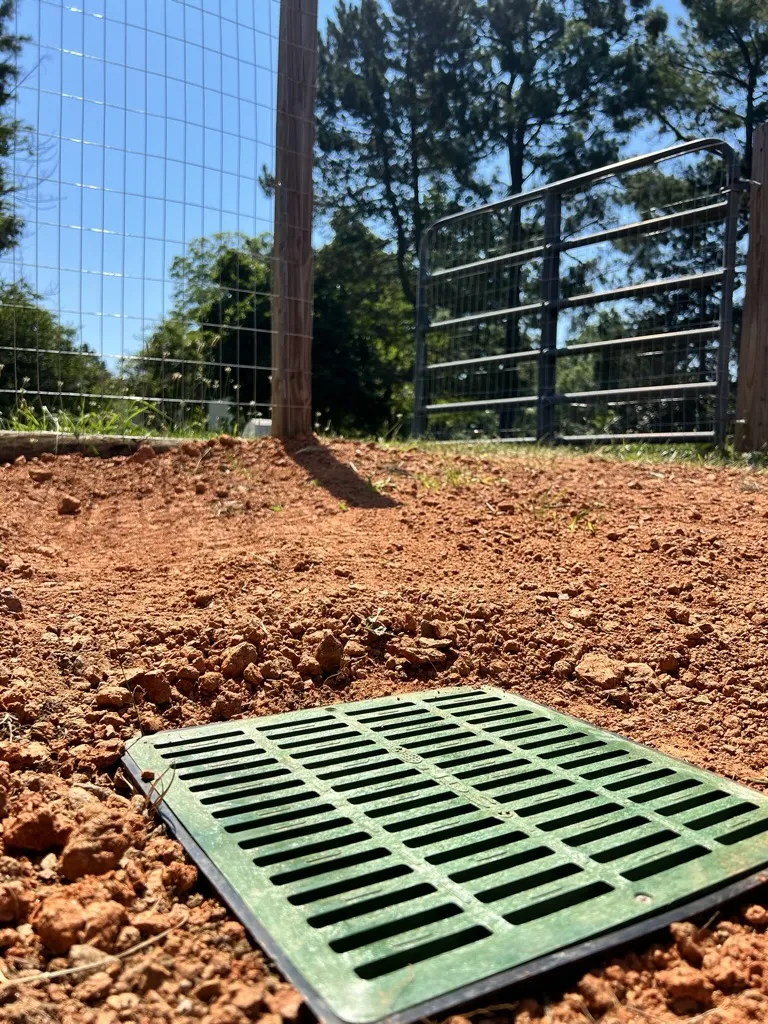
Grading changes the shape of the ground so surface water follows a more intentional route. A drainage component collects or carries water at a specific point. Some yards mainly need a low area reshaped; others may also require a swale, inlet, pipe, or downspout adjustment. It is possible for a drain to underperform when the surrounding grade still sends water to the wrong place, just as grading alone may not manage a concentrated discharge.
Ask the estimator to trace the proposed water path in plain language: where water will enter the work area, how the new elevations will direct it, and where it can leave without moving the problem elsewhere. If the project involves development, redevelopment, or regulated stormwater infrastructure, ask whether a plan or permit applies. The City of Winston-Salem publishes information about its post-construction stormwater review and permitting process.
What Should a Land Grading Estimate Include?
A useful estimate defines the work area and the finished result, not just a price for moving soil. It should be clear about access for equipment, the depth or extent of the correction, material brought in or removed, drainage components, rough and finish grading, erosion control or stabilization, and restoration after the ground is shaped.
Ask whether topsoil, seed, sod, mulch, planting, or hardscape repair is included. Also point out irrigation, landscape lighting wire, invisible fencing, septic components, gates, and private site features. Public utility markings may not identify every privately installed line. A narrow gate, steep access, soft ground, or a work area behind established landscaping can change how the job is approached.
Why Do Regrading Prices Vary So Much?
The square footage is only one cost factor. A smaller side yard may require more handling than an open backyard if equipment access is tight. Soil moisture, slope, elevation changes, imported fill or topsoil, excess-material removal, drainage parts, and the surface planned afterward all affect the scope. Equipment mobilization and protecting the access route matter too.
For that reason, a broad online average is not a reliable way to compare proposals. Make sure each estimate describes the same finished condition. One price may stop after rough grading while another includes drainage work, topsoil, and lawn restoration. Webber Landscaping’s earlier guide to land grading scope and cost factors provides a more detailed comparison checklist.
When Is the Best Time to Regrade a Winston-Salem Yard?
Workable soil and the forecast matter more than a single month. Saturated clay can rut, compact, or smear under equipment; very dry clay can be difficult to shape. A contractor may need to allow time after heavy rain before the site can support equipment and hold the intended elevations.
Schedule the grade with the next surface in mind. Seed and sod need appropriate establishment conditions and homeowner aftercare. Patios, retaining features, and other construction need the surrounding elevations coordinated before installation. For a broader site improvement, review grading and site preparation so clearing, access, base preparation, and the final use are considered together.
What Happens After the Ground Is Reshaped?
Disturbed soil needs a defined finish and protection from erosion. Before booking, confirm whether the surface will be stabilized with sod, seed, mulch, planting, gravel, or another planned material. Ask what watering, traffic limits, or other aftercare will be your responsibility and when the area should be checked again.
After completion, observe the property during normal rain. Look at the entire route, not only the original trouble spot. Water should not be redirected toward a structure, across a walkway, or into a new low area. Newly established turf or planting also needs to be protected while roots develop.
Seven Questions to Ask Before You Book
- What is causing the drainage or surface problem?
- Where will water travel after the elevations change?
- Is grading enough, or is a separate drainage component recommended?
- What soil, topsoil, or other material will be added or removed?
- How will equipment reach the work area, and what needs protection?
- What finished surface and restoration are included?
- What weather, stabilization, and aftercare expectations should I plan for?
Request a Land Grading Estimate in Winston-Salem
Webber Landscaping and Outdoor Solutions provides land grading for Winston-Salem homeowners and properties across the Piedmont Triad. Share where water travels or collects, when the issue is easiest to see, how the area can be accessed, and what you want the finished ground to support. Contact Webber Landscaping to request an estimate, or call (336) 770-2385.