
A low spot that stays soft, runoff moving toward the house, or a yard that is difficult to use can all lead to the same question: does the property need land grading, a drainage measure, or both? The answer depends on how water moves across the whole site—not just where the puddle appears.
For homeowners in Winston-Salem, the combination of rolling ground, changing rainfall, and Piedmont clay makes a property-specific assessment especially important. Before booking land grading and drainage work, use these questions to compare the proposed scope, cost factors, timing, and finished surface.
1. What Problem Should the Grading Estimate Explain?
Start with the symptom, but ask the estimator to look beyond it. Standing water may be the lowest visible point in a larger runoff path. Erosion along a bed, bare soil on a slope, a rough transition at a patio, and turf that repeatedly fails can also point to an elevation or drainage issue.
A useful scope identifies where water enters the work area, where it travels now, and where it can move without creating another problem. It should also distinguish between correcting a low spot, reshaping a broader slope, preparing a surface for sod or construction, and adding a separate drainage feature. Those are different jobs even when a homeowner first describes all of them as “fixing the yard.”
2. How Is Poor Grading Around a House Corrected?
There is no responsible one-step answer without seeing the site. Soil may need to be reshaped so surface water moves away from a structure and toward an appropriate outlet, but the plan must account for doors, walkways, patios, beds, neighboring grades, and existing drainage paths. Simply adding soil at one point can redirect water somewhere worse.
Downspout discharge should be part of the conversation. So should low areas between homes, compacted soil, driveway runoff, buried utilities, and the amount of clearance available for equipment. Depending on the cause, a plan may compare grading with a swale, surface inlet, drain, downspout adjustment, or a combination. Ask why the recommended approach fits the observed water path.
3. What Determines the Cost of Land Grading?
Broad online averages cannot account for the property in front of you. The size of the work area matters, but so do the depth of correction, amount of soil moved, number of elevation transitions, access, and the finish required afterward. A small side yard with a narrow gate can be more complicated than a larger open area.
Ask whether the estimate includes imported fill or topsoil, removal of excess material, equipment delivery, drainage components, erosion-control steps, and final smoothing. Also confirm whether seed, sod, mulch, planting, or hardscape restoration is included or priced separately. Comparing the same finished scope is more useful than comparing a single price for “grading.”
4. Why Can Grading Work Cost More Than Moving Dirt?
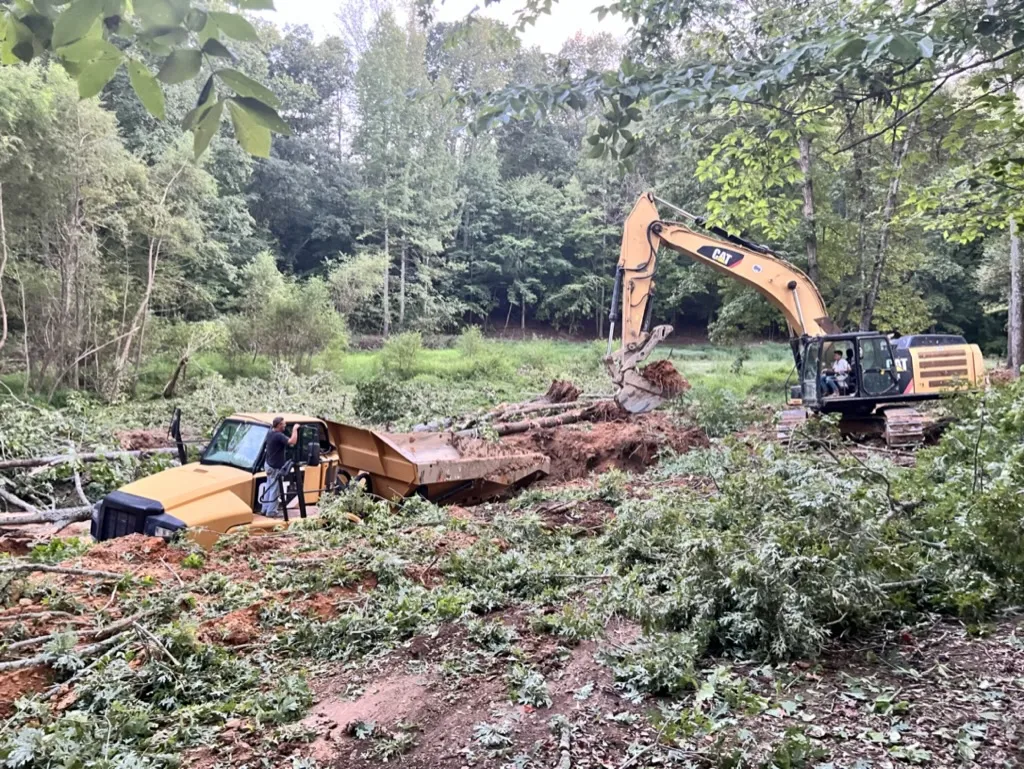
Grading combines planning, equipment, labor, and finish work. The crew may need to protect access points, work around utilities or structures, manage material so it does not create a new low area, and reach the intended elevations across multiple passes. Tight access can limit equipment choices and increase handling.
Soil condition also changes the work. Piedmont clay can be hard when dry and easily disturbed when wet. If soil is hauled away or brought in, material and transportation affect the estimate. Once the shape is corrected, the disturbed surface still needs a stable finish and an aftercare plan. These details explain why two similarly sized yards may have very different scopes.
5. What Time of Year Is Best to Regrade a Yard?
The best window is usually determined by workable soil and a suitable weather forecast rather than one calendar month. Saturated clay can rut or smear under equipment, while very dry clay may be difficult to shape. A contractor may recommend waiting after heavy rain so the work area can support equipment and hold the intended finish.
The next surface matters too. If the project will end with sod installation, seeding, planting, or mulch, schedule grading when the homeowner can support the watering and establishment that finish requires. If grading prepares for a patio, wall, or another built feature, coordinate elevations before hardscaping and construction begins.
6. How Do Winston-Salem Clay and Slope Affect the Plan?
Clay soil tends to drain and work differently as its moisture changes. On a sloped property, runoff can gain speed across compacted or bare ground, while a flatter low area may stay soft after nearby turf appears dry. That makes it important to observe the property during or shortly after rain.
Note any rills, exposed roots, sediment deposits, consistently damp turf, or water crossing a walkway. Photos taken during wet weather can help explain a pattern that is not visible on a dry estimate day. The goal is not to make every part of the property level; it is to create intentional transitions that support drainage and the planned use of the site.
7. Will Grading Alone Solve the Drainage Problem?
Sometimes grading is the main correction. Other times, reshaping the surface is only one part of the answer. Roof runoff, a concentrated discharge point, compacted soil, a retaining condition, or water entering from outside the immediate work area may call for an additional measure.
Ask the estimate to separate the grading work from any drain, pipe, inlet, outlet, swale, or downspout component. The plan should explain what each part is meant to do and where the water is expected to go. If the work is connected to development, redevelopment, or regulated stormwater infrastructure, ask whether plans or permits apply; the City of Winston-Salem maintains a post-construction stormwater permitting and review process for covered projects.
8. What Should Be Confirmed Before Work Is Booked?
Before accepting an estimate, make sure the written scope identifies the work area, access route, material assumptions, drainage objective, and planned finish. Confirm who will mark private utilities or site features that may not be covered by public utility locating. Point out irrigation, invisible dog fencing, septic components, shallow lighting wire, gates, and any area that equipment must avoid.
Ask what weather could change the start date, how disturbed soil will be stabilized, and what the homeowner must do after completion. A clear handoff is especially important when grading is followed by seed or sod because watering, traffic, and erosion can affect a newly finished surface.
Land Grading Estimate Checklist
Use this short checklist when comparing proposals:
- The drainage symptom and the larger water path have both been discussed.
- The work area and intended elevation changes are clearly identified.
- Equipment access, gates, slopes, structures, and known site features are accounted for.
- Imported soil, topsoil, material removal, drainage components, and restoration are itemized or clearly excluded.
- The finish surface—such as sod, seed, planting, mulch, or hardscape—is defined.
- Weather delays, stabilization, and aftercare expectations are explained.
For a more detailed look at project scope and warning signs, visit Webber Landscaping’s land grading service page. Homeowners planning a larger improvement can also review grading and site preparation services.
Request a Land Grading Estimate in Winston-Salem
Tell Webber Landscaping and Outdoor Solutions where water collects or travels, when the problem is most visible, how equipment can reach the area, and what surface you want after grading. Request a land grading estimate, or call (336) 770-2385 to discuss your Winston-Salem property.