
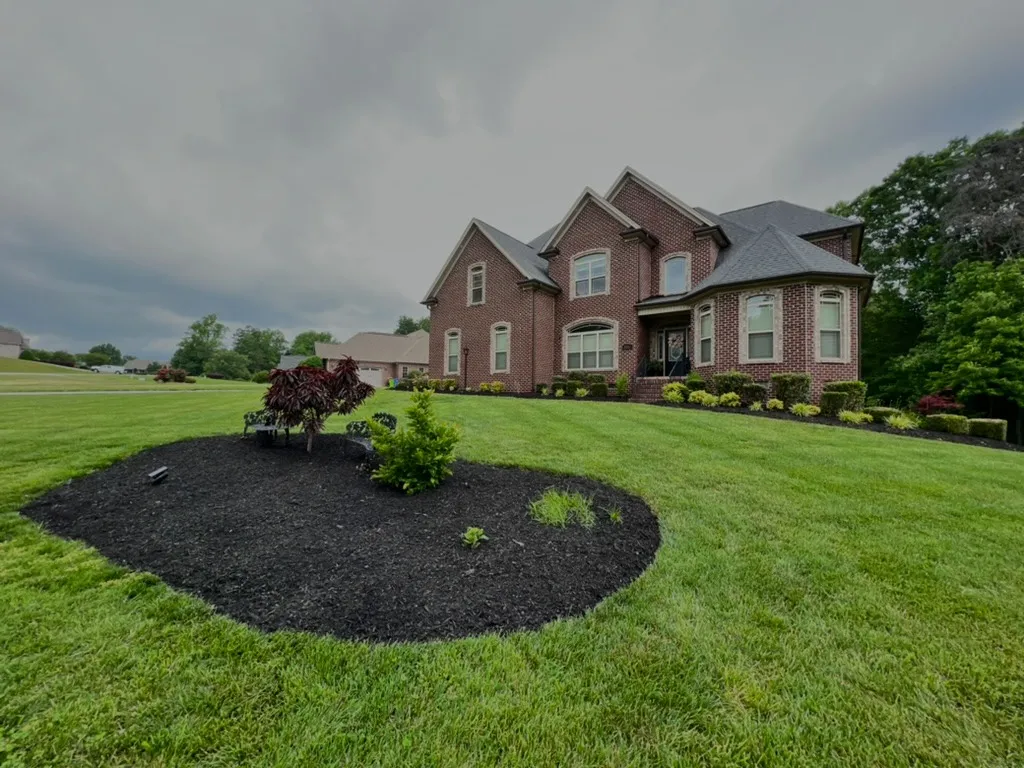
A well-designed landscape lighting system does three things at once: it makes your property safer after dark, it deters trespassers, and it transforms an ordinary yard into something worth looking at from the street or patio. In Winston-Salem and the Piedmont Triad, where outdoor living season stretches from March through November, lighting extends the usable hours of your patio, walkways, and yard by four to five hours every evening.
This guide covers the fixture types that work best in the Piedmont climate, where to place them for maximum impact, what they cost, and when it makes sense to hire a professional versus tackling it yourself.
Why Landscape Lighting Matters More Than You Think
Most homeowners consider landscape lighting a cosmetic upgrade. It is not. The National Association of Home Builders reports that outdoor lighting ranks among the top five most-desired exterior features for homebuyers, and properties with professionally installed landscape lighting sell for 15 to 20 percent more than comparable homes without it. Beyond resale value, outdoor lighting addresses three practical concerns that affect every Piedmont Triad property owner.
Safety. The Piedmont's clay soil shifts seasonally, creating uneven walkways, raised tree roots along paths, and subtle grade changes that are invisible after dark. A single path light every 8 to 10 feet along a walkway eliminates trip hazards and makes your property accessible at night. This is especially important for commercial properties where slip-and-fall liability is a real financial risk.
Security. The FBI's Uniform Crime Report data consistently shows that well-lit properties experience significantly fewer break-in attempts than dark ones. Motion-activated floodlights at entry points combined with ambient landscape lighting that eliminates dark hiding spots around the perimeter create a layered deterrent that costs far less than a security system and runs silently year-round.
Extended outdoor living. In late May through September, Winston-Salem sees sunset between 8:15 and 8:45 PM. Without lighting, your patio and outdoor living areas become unusable shortly after dark. With a proper lighting design, that patio you invested in becomes a comfortable evening space for dining, conversation, or simply unwinding after work -- adding three to four hours of daily use during peak season.
Fixture Types and Where to Use Them
Landscape lighting is not one-size-fits-all. Different fixture types serve different purposes, and a complete lighting design typically uses three to five fixture types working together. Here is what each type does and where it belongs in a Piedmont Triad landscape.
Path Lights
Path lights are low-to-the-ground fixtures (typically 14 to 24 inches tall) that cast a downward pool of light along walkways, driveways, and garden borders. They are the most commonly installed landscape light and the most immediately functional -- they prevent trips, define traffic flow, and welcome guests to your front entry.
Space path lights 8 to 10 feet apart along straight walkways and 6 to 8 feet apart on curves or where steps occur. Stagger them on alternating sides of the path for a natural, non-institutional feel. Avoid lining both sides evenly, which creates an airport-runway effect that looks commercial rather than residential.
Uplights and Spotlights
Uplights mount at ground level and project light upward onto trees, architectural features, or textured walls. They create dramatic shadows and highlight the vertical elements of your landscape that disappear completely after dark. In the Piedmont, where mature oaks, maples, and crepe myrtles are common, uplighting a single specimen tree can transform the entire look of a front yard.
For tree lighting, position the uplight 1 to 2 feet from the trunk and angle it to catch the canopy and branch structure. Use a 35 to 60-degree beam spread for most hardwoods. Narrower beams (15 to 25 degrees) work better for tall, columnar trees or illuminating a specific architectural detail on your home's facade.
Wash Lights and Wall Lights
Wash lights cast a broad, even glow across a wall, fence, or hedge. They are particularly effective on textured surfaces -- stone retaining walls, brick facades, and stacked-stone veneer all come alive under wash lighting because the light catches every ridge and shadow in the texture. If you have invested in hardscaping features like a natural stone retaining wall, wash lighting ensures that investment is visible after dark.
Step and Deck Lights
Recessed lights built into stair risers, deck edges, or seat walls provide safety lighting at grade changes without any visible fixtures. These are critical for elevated patios, multi-level decks, and any walkway with steps -- the number one location for outdoor falls after dark. In Piedmont neighborhoods with sloped lots (common in areas like Buena Vista, Sherwood Forest, and parts of Clemmons and Kernersville), step lights are a necessity rather than a luxury.
Downlights (Moonlighting)
Downlights mount high in trees (15 to 25 feet up) and project light downward through the canopy, mimicking the effect of moonlight filtering through branches. This technique, called moonlighting, creates soft, natural-looking illumination over patios, lawn areas, and garden beds without any visible fixtures at ground level. It is the most sophisticated landscape lighting technique and produces the most natural result.
Moonlighting works exceptionally well under the mature hardwood canopies found throughout Winston-Salem's established neighborhoods. Two to three well-placed downlights in a large oak can illuminate an entire backyard with a soft, dappled glow that no ground-level fixture can replicate.
LED vs. Halogen: The Case Is Settled
Low-voltage LED fixtures have replaced halogen in virtually every professional landscape lighting installation, and for good reason. The performance gap is significant across every metric that matters.
| Factor | LED | Halogen |
|---|---|---|
| Lifespan | 40,000 - 50,000 hours | 2,000 - 5,000 hours |
| Energy use | 2 - 8 watts per fixture | 20 - 50 watts per fixture |
| Annual operating cost (20 fixtures) | $15 - $30/year | $120 - $250/year |
| Heat output | Minimal | High (burns mulch, damages plants) |
| Color temperature options | 2700K - 5000K (adjustable) | 2800K - 3200K (fixed) |
| Fixture cost | $30 - $150 each | $15 - $60 each |
The higher upfront cost of LED fixtures pays for itself within 12 to 18 months through energy savings alone. Factor in the labor cost of replacing halogen bulbs every one to two years (versus LEDs lasting 10 to 15 years), and the total cost of ownership is not even close. For the Piedmont's climate specifically, LEDs also generate almost no heat, which matters when fixtures sit next to mulch beds and plantings in 95-degree summer humidity.
Color temperature recommendation for the Piedmont: 2700K (warm white) for residential landscapes. This warm tone complements the brick, stone, and earth tones common in Piedmont Triad architecture and creates an inviting atmosphere. Avoid anything above 4000K (cool white), which looks harsh and institutional in a residential setting.
How Much Does Landscape Lighting Cost?
Landscape lighting costs in the Winston-Salem market break down into three categories: fixtures, transformer and wiring, and installation labor. Here are typical ranges for complete, professionally installed systems as of 2026.
| System Size | Typical Fixtures | Cost Range | Best For |
|---|---|---|---|
| Basic (6 - 10 fixtures) | Path lights + 2-3 uplights | $1,500 - $3,000 | Front walkway and entry |
| Standard (12 - 20 fixtures) | Path + uplights + step lights | $3,000 - $6,000 | Front yard + patio area |
| Comprehensive (20 - 35 fixtures) | Full property coverage | $5,000 - $10,000 | Front + back + accent features |
| Premium (35+ fixtures) | Full property + moonlighting + smart controls | $10,000 - $20,000+ | Large properties, estates |
These prices include professional-grade fixtures (not big-box solar lights), a low-voltage transformer, direct-burial wiring, and installation labor. The transformer converts your home's 120V power to a safe 12V system that requires no electrician for the outdoor wiring -- any licensed landscaping contractor can install the low-voltage components.
For commercial properties, lighting costs scale with property size but follow the same per-fixture pricing. A commercial landscape with parking lot perimeter lighting, building accent lighting, and entry walkway fixtures typically runs $8,000 to $25,000 depending on the scope.
Common Landscape Lighting Mistakes
More is not always better with landscape lighting. The most impactful designs use restraint and precision placement rather than flooding every surface with light. Here are the mistakes that waste money and produce poor results.
Too many fixtures, too close together. Over-lighting creates a washed-out, flat look that eliminates the shadows and contrast that make landscape lighting dramatic. A well-designed 15-fixture system with precise placement outperforms a 30-fixture system where lights are spaced every 4 feet.
Ignoring the dark spots. The contrast between lit and unlit areas is what creates visual depth. A good lighting plan intentionally leaves some areas in shadow to create dimension. Lighting everything uniformly produces a parking-lot effect, not an inviting landscape.
Using solar-powered path lights. Solar landscape lights from home improvement stores produce 5 to 15 lumens of output compared to 100 to 300 lumens from professional low-voltage fixtures. After two to three years, the batteries degrade and output drops further. They are also inconsistent -- cloudy Piedmont winter days produce barely any charge, leaving your walkway dark when you need it most. Professional low-voltage systems deliver consistent output every night regardless of weather.
Pointing lights at the viewer. Every fixture should light a surface, not a sightline. If you can see the bulb from any normal viewing angle (front door, patio, driveway), the fixture is aimed wrong. Glare from poorly aimed fixtures is worse than no lighting at all -- it destroys night vision and creates dangerous blind spots on walkways.
Skipping the timer or photocell. A system that requires manual switching does not get used consistently. Every professional installation includes a transformer with either a built-in astronomical timer (adjusts automatically for sunset throughout the year) or a photocell that turns the system on at dusk and off at a set time. Smart transformers with Wi-Fi connectivity allow app-based control and scheduling from your phone.
DIY vs. Professional Installation
Low-voltage landscape lighting is one of the few outdoor projects where a capable homeowner can achieve professional-looking results. The wiring is safe to handle (12 volts, not 120), the connections are straightforward, and no permits are required. That said, the results differ significantly between DIY and professional work.
DIY makes sense when: you are lighting a simple front walkway with 6 to 8 path lights, you have basic comfort with outdoor wiring, and you are working with a flat, accessible property. Budget: $400 to $800 for a quality DIY kit with LED fixtures and a transformer.
Professional installation makes sense when: you want uplighting, moonlighting, or any technique beyond basic path lighting; your property has significant grade changes, mature trees, or complex landscaping; you want the wiring buried properly rather than sitting on top of mulch; or you need more than 12 to 15 fixtures requiring transformer load calculations and wire gauge sizing.
The most common DIY failure point in the Piedmont is wire burial depth. Professional installations bury low-voltage wire 6 to 8 inches deep, below the mulch and root zone where it is protected from shovels, aerators, and digging animals. DIY installations often leave wire sitting under an inch of mulch, where it gets cut the first time the beds are maintained or the lawn is aerated. In Piedmont clay soil, proper burial requires a trencher or flat spade -- it is not difficult, but it is labor-intensive and skipping it guarantees future repairs.
Piedmont-Specific Considerations
The Piedmont Triad's climate and landscape create a few region-specific factors that affect landscape lighting installations.
Humidity and corrosion. Winston-Salem's average relative humidity exceeds 70% from May through September. Choose fixtures rated IP65 or higher, with brass, copper, or marine-grade aluminum housings. Avoid painted steel or zinc fixtures, which corrode within two to three years in the Piedmont's humid conditions. Quality brass and copper fixtures actually look better with age as they develop a natural patina.
Mature tree canopies. The Piedmont's established neighborhoods are full of mature oaks, hickories, and tulip poplars that provide ideal mounting points for moonlighting fixtures. These trees also create dense shade that makes ground-level solar fixtures even less viable than in sunnier climates. Professional moonlighting installations in mature trees produce the most dramatic results in the Piedmont specifically because the canopy structure is so well-developed.
Red clay soil and drainage. When burying low-voltage wire in Piedmont clay, install it in a bed of gravel or sand to prevent wire abrasion as the clay expands and contracts seasonally. Direct burial in clay without protection can damage wire insulation over three to five years as the soil cycles between wet expansion and dry contraction. This is a detail that separates professional installations from DIY work.
Storm resilience. The Piedmont receives an average of 46 inches of rain annually, including intense summer thunderstorms. All outdoor connections must use waterproof, gel-filled connectors rather than standard wire nuts. Transformers should be mounted at least 12 inches above grade in a protected location to prevent water intrusion during heavy downpours.
The Bottom Line
Landscape lighting is the single improvement that changes how your property looks and functions more than any other dollar-for-dollar investment. A basic system for a front walkway starts under $2,000 installed. A comprehensive system that covers the full property runs $5,000 to $10,000. Either way, you get immediate daily use from the investment rather than waiting for a future buyer to appreciate it.
Late spring is the ideal time to install landscape lighting in the Piedmont -- the ground is workable, the growing season allows disturbed turf and beds to recover quickly, and you get the full benefit of the system through the entire summer outdoor season.
Webber Landscaping provides professional landscape lighting design and installation throughout the Piedmont Triad, including Winston-Salem, Greensboro, High Point, Kernersville, and Clemmons. We handle everything from design and fixture selection to wiring, installation, and integration with your existing landscaping and hardscape features. Request a free estimate or call (336) 770-2385 to start planning your project.